Buying used equipment can be a smart move for many businesses. Used machines, vehicles, trailers, tools, and commercial equipment often cost less than new equipment while still helping the business generate revenue — and used equipment financing can make those purchases easier to manage.
But even when the purchase price is lower, paying cash for used equipment can still put pressure on working capital. That is why many business owners consider used equipment financing before writing a large check.
Used equipment financing can help a business acquire the equipment it needs while preserving cash for payroll, fuel, repairs, inventory, marketing, insurance, materials, and other operating expenses.
The key is understanding how used equipment financing works, what lenders may review, and how to prepare before you buy.
What Is Used Equipment Financing?
Used equipment financing is a funding option that allows a business to purchase previously owned equipment and spread the cost over time instead of paying the full amount upfront.
The equipment may be purchased from a dealer, vendor, auction, or private seller, depending on the lender and transaction. The financing structure can vary based on the business, equipment type, seller, purchase price, credit profile, time in business, and lender requirements.
For many businesses, used equipment financing is a practical way to get needed equipment without draining cash reserves.
Why Businesses Buy Used Equipment
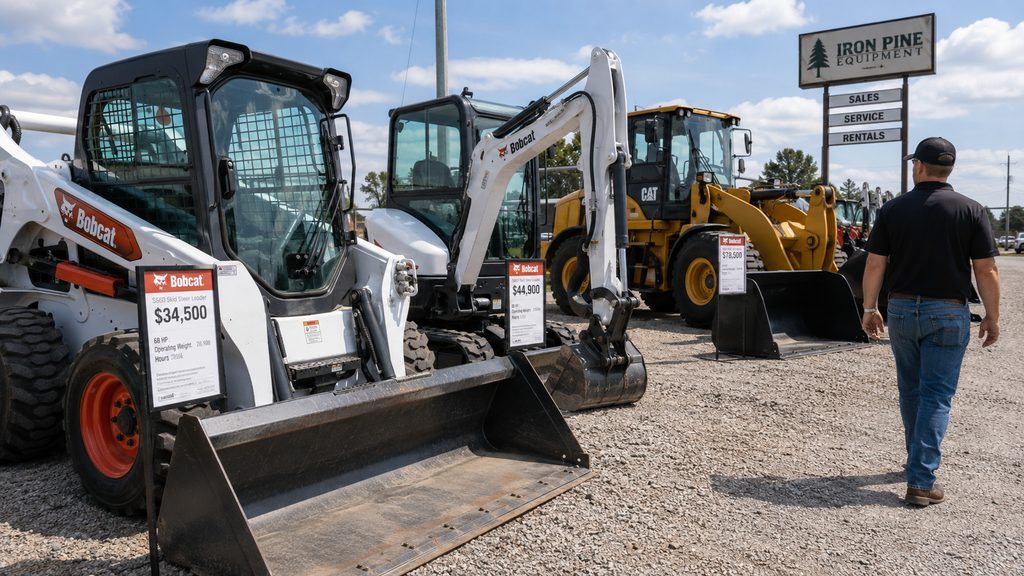
Many business owners choose used equipment because it can offer strong value. A used machine may provide the performance the business needs at a lower cost than a new model.
Used equipment can make sense when the business wants to:
- Lower the total purchase price
- Replace broken or outdated equipment
- Add capacity without buying new
- Avoid long lead times for new equipment
- Purchase a specific make or model that is already available
- Expand into a new service line with less upfront cost
- Buy equipment from an auction, private seller, or dealer lot
Used equipment can be especially attractive in industries where equipment has a long useful life, strong resale value, or a proven track record in the field.
What Types of Used Equipment Can Be Financed?
Many types of used business equipment may be financeable when the equipment is used for business purposes and supports operations or revenue.
Common examples include:
- Used construction equipment
- Used trucks and trailers
- Used manufacturing machinery
- Used restaurant equipment
- Used medical or dental equipment
- Used landscaping equipment
- Used auto repair equipment
- Used agricultural equipment
- Used forklifts and material handling equipment
- Used commercial cleaning equipment
- Used drones and commercial UAV equipment
- Used event rental or party rental equipment
The exact eligibility depends on the equipment, seller, price, condition, business profile, and available lender programs.
Used Construction Equipment Financing
Used construction equipment is one of the most common categories for used equipment financing. Contractors often buy used equipment because heavy machinery can remain productive for many years when properly maintained.
Examples may include used excavators, skid steers, loaders, backhoes, bulldozers, compact track loaders, dump trucks, cranes, pavers, rollers, compactors, attachments, and trailers.
For contractors, the right piece of construction equipment financing can help complete jobs faster, reduce rental costs, take on larger projects, or replace machines that are causing downtime.
Used Trucks, Trailers, and Work Vehicles
Many businesses also finance used trucks, trailers, and work vehicles. These assets may be essential for moving equipment, delivering goods, transporting crews, or expanding service areas.
Used transportation equipment may include box trucks, dump trucks, work trucks, service trucks, flatbed trailers, enclosed trailers, utility trailers, delivery vehicles, shuttle vans, and tow trucks.
Even when a used truck or trailer costs less than a new one, financing may help the business keep cash available for insurance, maintenance, fuel, payroll, and operating expenses.
Used Restaurant and Food Service Equipment
Restaurants, food trucks, bakeries, cafes, and commercial kitchens may also benefit from used equipment financing.
Examples may include used ovens, ranges, fryers, refrigeration units, walk-in coolers, freezers, prep tables, dishwashers, coffee equipment, bakery equipment, ice machines, POS systems, and food truck equipment.
For food service businesses, equipment is tied directly to production capacity. Financing used equipment can help a business open, expand, or replace critical items without using all available cash.
Used Manufacturing and Industrial Equipment
Manufacturing and industrial businesses often need expensive machinery to operate efficiently. Used machinery can be a practical option when the equipment is reliable and priced appropriately.
Used manufacturing equipment may include CNC machines, lathes, mills, press brakes, laser cutters, welding equipment, packaging systems, conveyors, compressors, printing equipment, and fabrication machinery.
Because these assets may be used for several years, financing can help match the cost of the equipment to the useful life of the asset.
Why Finance Used Equipment Instead of Paying Cash?
The biggest reason to finance used equipment is cash preservation.
A used equipment purchase may still require tens of thousands or hundreds of thousands of dollars. Paying cash can reduce monthly obligations, but it can also leave the business with less capital for daily operations and growth.
Financing may allow the business to:
- Preserve working capital
- Keep cash available for payroll and operating expenses
- Acquire equipment sooner
- Replace unreliable equipment before downtime gets worse
- Take advantage of a good equipment opportunity
- Match payments to the value the equipment helps create
- Avoid tying up too much capital in one purchase
The goal is not simply to avoid paying cash. The goal is to buy equipment in a way that keeps the business financially strong after the purchase is complete.
What Lenders May Review for Used Equipment Financing
Lenders may review both the business and the equipment. Because used equipment varies by age, condition, hours, mileage, value, and seller type, the lender may need enough information to understand the transaction.
Common review factors may include:
- Business time in operation
- Business revenue and cash flow
- Credit profile
- Equipment type
- Equipment age
- Hours or mileage
- Equipment condition
- Purchase price
- Seller type
- Invoice, quote, or bill of sale
- Serial number, VIN, title, or ownership information when applicable
- Whether the equipment will be used for business purposes
Approval requirements vary. Some established businesses may qualify with a streamlined application process, while newer businesses or more complex transactions may require additional documentation.
Dealer, Auction, and Private Seller Purchases
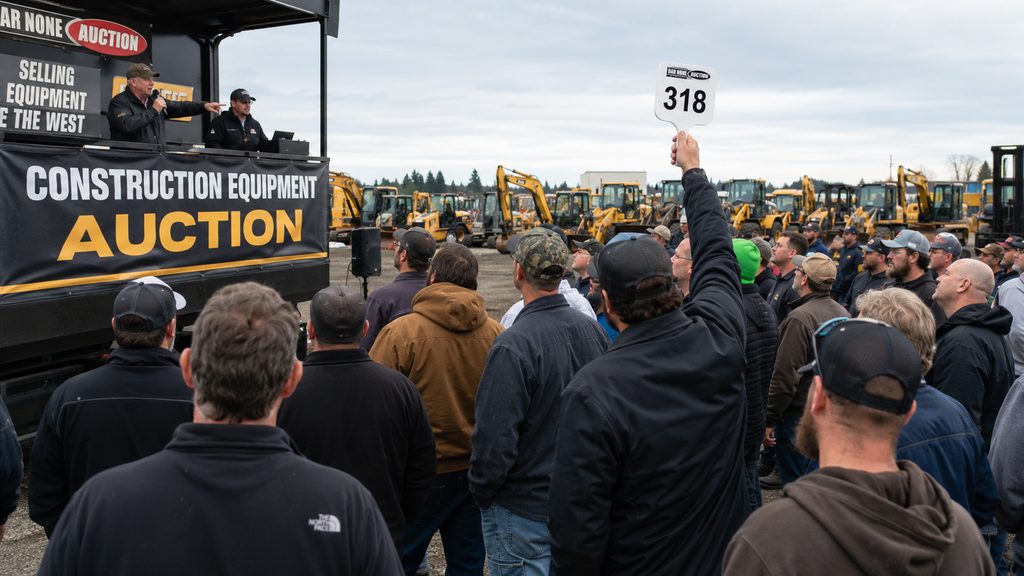
Used equipment may be purchased in different ways, and the seller type can affect the financing process.
Buying From a Dealer
Dealer purchases are often easier to document because dealers can usually provide invoices, equipment descriptions, serial numbers, payoff information, and other required transaction details.
Buying at Auction
Auction purchases can move quickly. Business owners should consider getting prequalified before bidding so they have a better idea of what financing may be available before they commit to a purchase.
Buying From a Private Seller
Private seller transactions may also be possible, but they can require more review. The lender may need to verify the seller, equipment, title, serial number, condition, lien status, and purchase details.
If you are buying from a private seller or auction, it is especially important to gather documentation early and avoid assuming financing will be automatic after the purchase is made.
Questions to Ask Before Financing Used Equipment
Before financing used equipment, business owners should ask:
- Will this equipment help the business generate revenue, reduce downtime, or improve efficiency?
- Is the purchase price reasonable for the equipment age, condition, and market value?
- How many hours or miles are on the equipment?
- Has the equipment been maintained properly?
- Are service records available?
- Is there a title, VIN, serial number, or ownership record?
- Are there liens or payoff requirements?
- Can the seller provide a clear invoice or bill of sale?
- Can the business afford the payment during slower months?
- Would paying cash reduce the business cash reserves too much?
The best used equipment purchase is not only affordable. It should also be reliable, useful, and financially manageable for the business.
Benefits of Used Equipment Financing
Used equipment financing can help business owners:
- Buy equipment at a lower cost than new
- Preserve cash reserves
- Replace broken or outdated assets
- Expand capacity
- Take on larger jobs
- Reduce rental dependence
- Avoid major upfront cash pressure
- Acquire revenue-producing equipment faster
- Finance equipment from a dealer, auction, or private seller when eligible
For many businesses, used equipment can be the practical middle ground between doing nothing and buying new. Financing can make that purchase easier to manage from a cash flow standpoint.
Potential Challenges With Used Equipment Financing
Used equipment financing can be useful, but there are some challenges to understand.
Older equipment, high-hour equipment, unusual assets, unclear seller documentation, title issues, or equipment with limited resale value may be harder to finance. A lender may also require more information for a private seller or auction purchase than for a dealer transaction.
That does not mean the equipment cannot be financed. It simply means the transaction may require more review, more documentation, or a different financing structure.
How to Prepare Before Applying
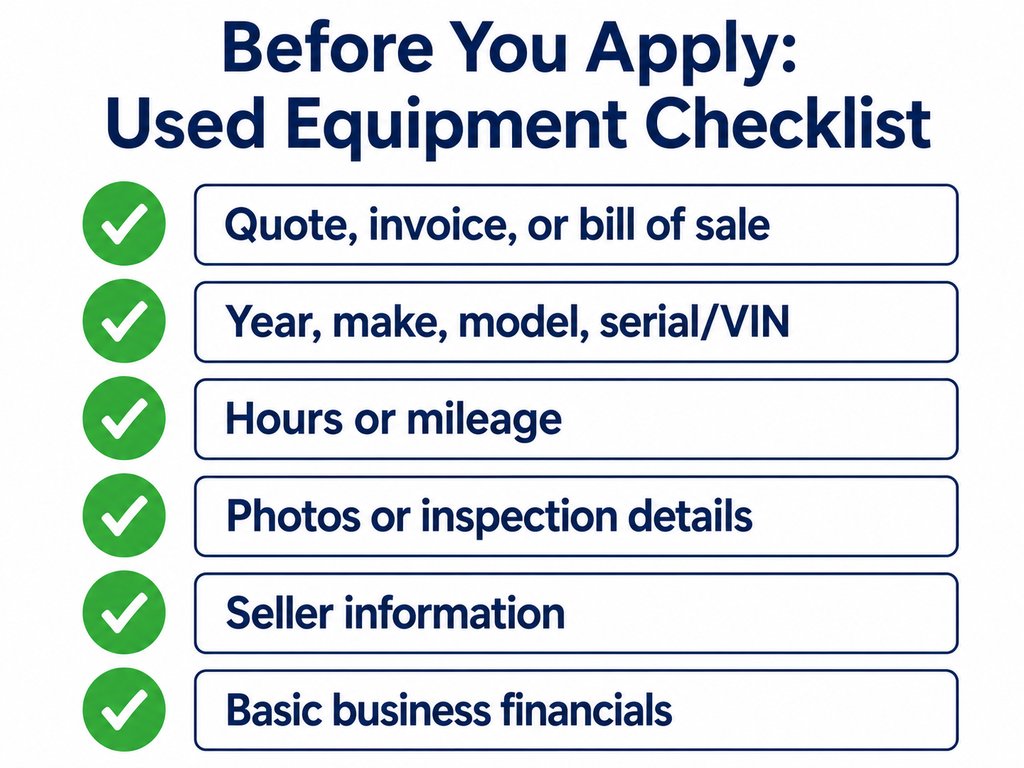
To make the process smoother, gather as much information as possible before applying. Helpful items may include:
- Equipment quote, invoice, auction listing, or bill of sale
- Equipment year, make, model, and serial number or VIN
- Hours, mileage, or usage information
- Photos or inspection details when available
- Seller name and contact information
- Business legal name and ownership information
- Basic business revenue information
- Bank statements or financial documents if requested
Getting prequalified before you shop can also help you understand potential financing options before committing to a purchase.
When Used Equipment Financing Makes Sense
Used equipment financing may make sense when the equipment has a clear business purpose and the payment fits the business cash flow.
It can be especially useful when:
- The equipment will help generate revenue
- The equipment will reduce downtime or rental costs
- The business wants to preserve cash
- The equipment is available at a good price
- The business needs the equipment now rather than later
- The asset has a useful life that supports financing
- The seller can provide the documentation needed for review
Financing should support the business, not strain it. The payment should be considered alongside expected revenue, cash reserves, operating expenses, and seasonal fluctuations.
Final Takeaway
Used equipment financing can be a strong option for business owners who need equipment but want to preserve cash reserves.
Used equipment may cost less than new, but it can still require a major upfront investment. Financing can help spread that cost over time while allowing the business to put the equipment to work.
Before buying used equipment, review the equipment condition, seller documentation, purchase price, and how the asset will support the business. If the equipment helps generate revenue, reduce downtime, or improve efficiency, financing may be worth considering.
The smartest equipment decision is not always buying the newest machine or paying cash. It is choosing the equipment and financing structure that keeps your business operating, growing, and financially healthy.
Frequently Asked Questions About Used Equipment Financing
Yes. Many types of used business equipment may be financeable depending on the equipment type, age, condition, seller, purchase price, business profile, credit profile, and lender approval.
Businesses may be able to finance used construction equipment, trucks, trailers, restaurant equipment, manufacturing machinery, medical equipment, landscaping equipment, agricultural equipment, forklifts, drones, and other equipment used for business purposes.
In some cases, yes. Private seller transactions may require additional review, including seller verification, equipment details, serial number or VIN, title information, lien status, invoice, or bill of sale.
Auction equipment may be financeable depending on the lender and transaction. Business owners should consider getting prequalified before bidding so they understand possible financing options before committing to a purchase.
It depends on the business, equipment needs, budget, warranty considerations, availability, and cash flow. Used equipment may lower the purchase price, while new equipment may offer newer features or warranty coverage. Financing can help compare both options.
Common items may include an equipment quote, invoice, auction listing, bill of sale, year, make, model, serial number or VIN, seller information, business details, and financial documents if requested by the lender.
A down payment may or may not be required depending on the business profile, equipment type, credit profile, seller, lender program, and approval terms.
Need Used Equipment for Your Business?
BNC Finance helps business owners explore financing options for new and used equipment across many industries. Get prequalified before you buy and compare options before using your cash.
All financing is subject to credit approval. Terms, structures, rates, documentation requirements, down payment requirements, and availability vary by business profile, equipment type, seller, lender requirements, and approval. BNC Finance is not providing tax, legal, accounting, or financial advice through this article. Business owners should consult their own advisors before making financing, tax, legal, or business decisions.