When your business needs a new piece of equipment, one of the first questions is simple: should I pay cash, or should I finance it?
At first, paying cash can feel like the obvious answer. No monthly payment. No financing agreement. No lender involved. You buy the equipment and move on.
But for many business owners, the better question is not, “Can I afford to pay cash?” The better question is: “What happens to my business after I spend that cash?”
Equipment is rarely just a purchase. It affects cash flow, job capacity, revenue, downtime, payroll, and the ability to take on new work. That is why financing can make sense even for businesses that technically have the money available.
Paying Cash Sounds Simple, But It Has a Cost
Paying cash may help you avoid a monthly payment, but it also removes capital from your business immediately. That cash could have been used for:
- Payroll
- Marketing
- Inventory
- Repairs
- Fuel
- Rent
- Insurance
- Emergency expenses
- Hiring
- Taking on a larger job
- Covering slow-paying customers
For some businesses, using cash is fine. If the purchase is small, your reserves are strong, and the equipment will not create a strain on operations, paying cash can be a clean solution.
But if the purchase would leave your business tight, financing may be the better business decision.
Financing Helps Preserve Working Capital

Working capital is the money your business uses to keep operating day to day.
Even profitable businesses can run into problems when too much cash gets tied up in equipment. A contractor may have jobs booked but need money for labor and materials. A restaurant may need new equipment but still has rent, payroll, and food costs. A medical practice may need updated technology but cannot afford to disrupt cash reserves.
Financing allows a business to acquire the equipment it needs while spreading the cost over time. Instead of using a large amount of cash upfront, the business can keep more money available for operations and growth. If your business is newer, our guide to cash management and equipment financing for startups covers this in more detail.
The Equipment May Help Pay for Itself
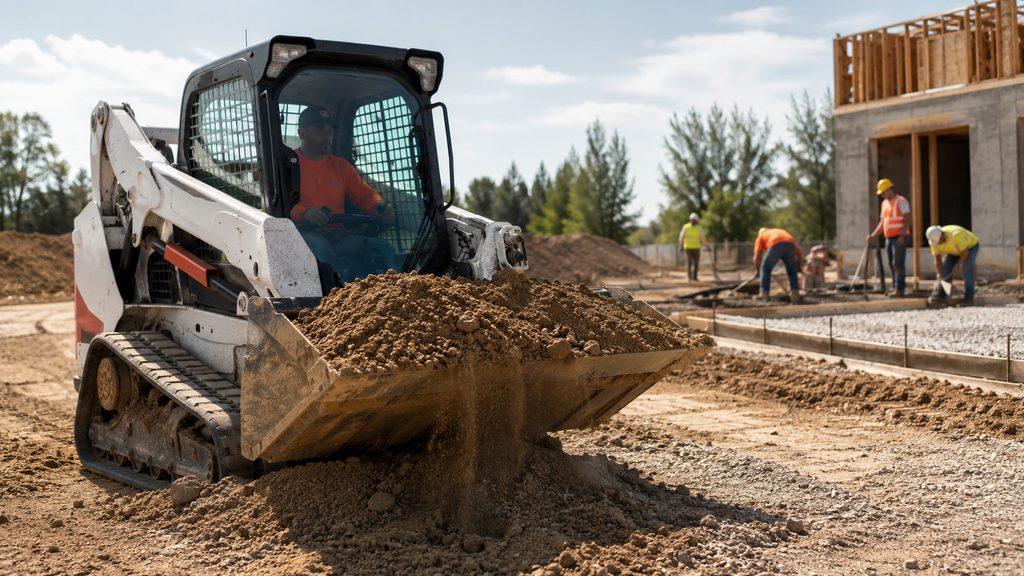
The strongest case for financing is when the equipment helps generate revenue. For example:
- A contractor buys a skid steer that allows them to complete more jobs.
- A food truck owner adds equipment that increases daily sales capacity.
- A medical office buys diagnostic equipment that allows them to offer more services.
- A landscaping company adds a trailer, mower, or loader that helps crews work faster.
- A manufacturing business upgrades machinery to increase production.
In these cases, the equipment is not just an expense. It is a tool that helps the business earn.
That does not mean every equipment purchase should be financed. But if the equipment can help produce revenue, reduce downtime, or improve efficiency, a monthly payment may be easier to justify than draining cash upfront.
Paying Cash Can Limit Growth
Many business owners think financing is only for companies that do not have cash. That is not always true. Strong businesses often use financing because they want to keep capital available for other opportunities.
For example, say a business has $100,000 available and is considering a $75,000 equipment purchase. Paying cash may leave only $25,000 in reserve. If a large job opportunity comes in the next month, the business may not have enough available cash to support labor, materials, or upfront costs.
Financing the equipment may allow the business to keep more cash available while still putting the equipment to work.
The point is not to avoid using cash entirely. The point is to avoid putting the business in a weaker position just to avoid a payment.
When Paying Cash May Make Sense
Paying cash may be a good option when:
- The equipment cost is small relative to your cash reserves
- The purchase will not affect payroll or operating expenses
- You have plenty of emergency cash left after the purchase
- The equipment is not essential to revenue growth
- You want to avoid financing for a short-life or low-value asset
- You have already compared the opportunity cost of using cash
If paying cash does not weaken the business, it can be a simple option. The risk comes when a business spends cash because it wants to avoid debt, but then later needs capital for something more important.
When It May Make More Sense to Finance Business Equipment
Financing may be the better option when:
- The equipment is essential to operations
- The equipment will help generate revenue
- You want to preserve cash reserves
- You need to buy equipment before a large job starts
- You are replacing equipment that is causing downtime
- You want to match the cost of the equipment to the income it helps create
- You are buying multiple pieces of equipment
- You want to keep capital available for payroll, inventory, or growth
For many businesses, the monthly payment is not the problem. The bigger problem is not having the equipment needed to operate, grow, or compete.
Ask These Questions Before Deciding
Before paying cash or financing equipment, ask yourself:
- How much cash will I have left after the purchase? If the answer makes you uncomfortable, financing may be worth considering.
- Will this equipment help my business make money? If the equipment increases capacity, speed, service offerings, or job size, it may justify a monthly payment.
- What happens if an emergency comes up next month? Cash reserves matter. Equipment ownership does not help if the business becomes cash-strapped.
- How long will I use the equipment? Longer-life equipment is often a better fit for financing because the cost can be spread over the useful life of the asset.
- Do I need the equipment now to take on work? Waiting to save more cash can sometimes cost more than financing if it causes missed revenue.
Financing Is a Business Tool, Not a Last Resort
One of the biggest misconceptions about financing is that it means a business is struggling. In reality, financing is often a planning tool.
Business owners use financing to preserve cash, acquire revenue-producing assets, manage growth, and avoid tying up too much capital in one purchase.
The right financing structure depends on the business, the equipment, the credit profile, the time in business, and the purpose of the purchase. Some businesses may qualify for streamlined equipment financing. Others may need a structure based on the asset, revenue, collateral, or overall business profile. BNC Finance’s equipment financing page explains that programs can vary based on the business profile, equipment, and lender approval. Financing can also work alongside tax planning — see our guide on how small businesses use Section 179 to afford new equipment.
Final Takeaway
Paying cash is not automatically better. Financing is not automatically better. The smarter decision depends on how the purchase affects your business after the equipment is bought.
If paying cash leaves your business strong, it may be the right move. But if paying cash limits your ability to operate, grow, handle emergencies, or take on new work, financing may be the better option.
Before making the decision, compare both paths:
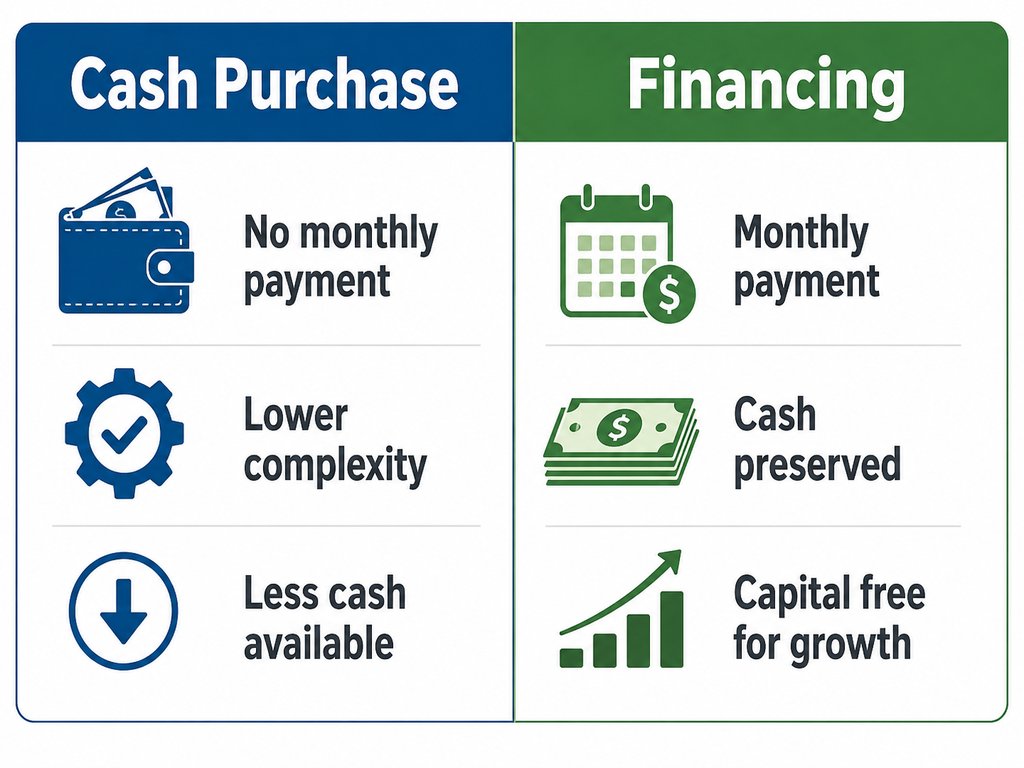
- Cash purchase: lower complexity, no monthly payment, but less cash available.
- Financing: monthly payment, but more cash preserved for business operations and growth.
For many business owners, the goal is not just to buy equipment. The goal is to buy equipment in a way that keeps the business financially healthy.
Frequently Asked Questions
It depends on how the purchase affects your business afterward. If paying cash leaves your reserves strong, it can be a clean option. If it would leave your business tight, financing helps preserve working capital for payroll, inventory, emergencies, and growth.
No. Financing is often a planning tool. Strong businesses use it to keep capital available for other opportunities, acquire revenue-producing assets, and avoid tying up too much cash in one purchase.
Paying cash may make sense when the cost is small relative to your reserves, the purchase will not affect payroll or operations, and you still have plenty of emergency cash left afterward.
Ready to Compare Your Options?
If you are considering an equipment purchase, BNC Finance can help you review financing options for new or used business equipment, subject to lender approval.
Get prequalified and see what financing options may be available for your business, or talk to BNC Finance about your equipment purchase.
All financing is subject to credit approval. Terms, structures, and availability vary by business profile, equipment type, and lender requirements. This article is for general information only and is not tax, legal, or financial advice.