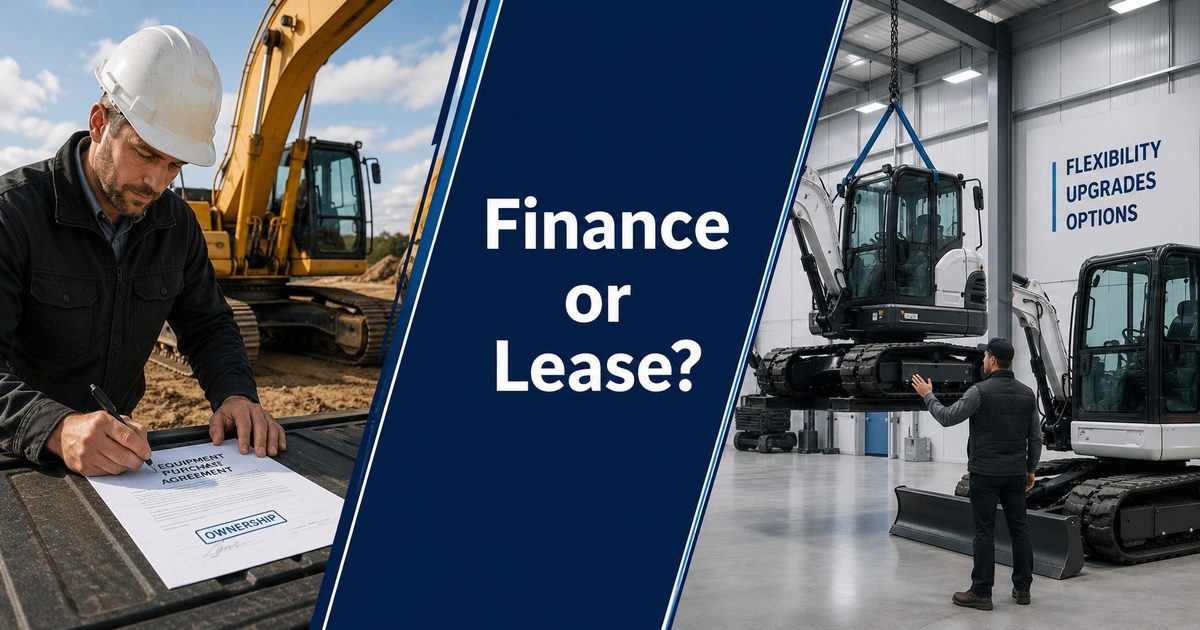
When a business needs equipment, there are usually two common ways to get it without paying the full cost upfront: equipment financing vs equipment leasing.
Both options can help business owners acquire equipment while preserving cash, and both create predictable payments. They work for many types of business equipment, including construction equipment, trucks, trailers, restaurant equipment, medical equipment, manufacturing machinery, landscaping equipment, drones, and technology.
But equipment financing and equipment leasing are not the same thing.
The right choice depends on how your business will use the equipment, whether you want to own it, how long you expect to keep it, how important flexibility is, and how the payment fits your cash flow.
This guide explains the difference in plain English so business owners can compare both options before making a purchase decision.
What Is Equipment Financing?
Businesses commonly use equipment financing when they want to purchase equipment and pay for it over time.
In many financing structures, the equipment is treated as a business asset being acquired by the borrower. The business makes scheduled payments over an agreed term, and the equipment often serves as collateral for the financing. Once the agreement is satisfied, the business typically owns the equipment free and clear, depending on the structure.
Business owners often use equipment financing when they want long-term use of the equipment and expect the asset to remain useful for several years.
Equipment financing may make sense when:
- You want to own the equipment long term
- The equipment has a long useful life
- The equipment is essential to operations or revenue
- You want predictable payments instead of a large cash purchase
- You are buying equipment you expect to use for years
- You want to preserve working capital while still acquiring the asset
What Is Equipment Leasing?
Equipment leasing is a structure where the business uses equipment for a defined period in exchange for payments. Depending on the lease structure, the business may have options at the end of the term, such as returning the equipment, renewing the lease, upgrading equipment, or purchasing the equipment through a buyout option.
Leasing can be helpful when a business wants access to equipment but may not want to commit to long-term ownership from the start. It can also be useful for equipment that may become outdated, needs regular upgrades, or serves a short-term need.
Not all leases work the same way. Some lead toward ownership, while others focus more on use and flexibility. The details matter, especially the end-of-term options.
Equipment leasing may make sense when:
- You want flexibility at the end of the term
- The equipment may need to be upgraded regularly
- You do not want to tie up cash in equipment ownership immediately
- You need equipment for a defined period or project
- You want to preserve capital while using the asset now
- You want to compare different end-of-term options before committing to ownership
Equipment Financing vs Equipment Leasing: The Basic Difference
The simplest way to think about the difference is this:
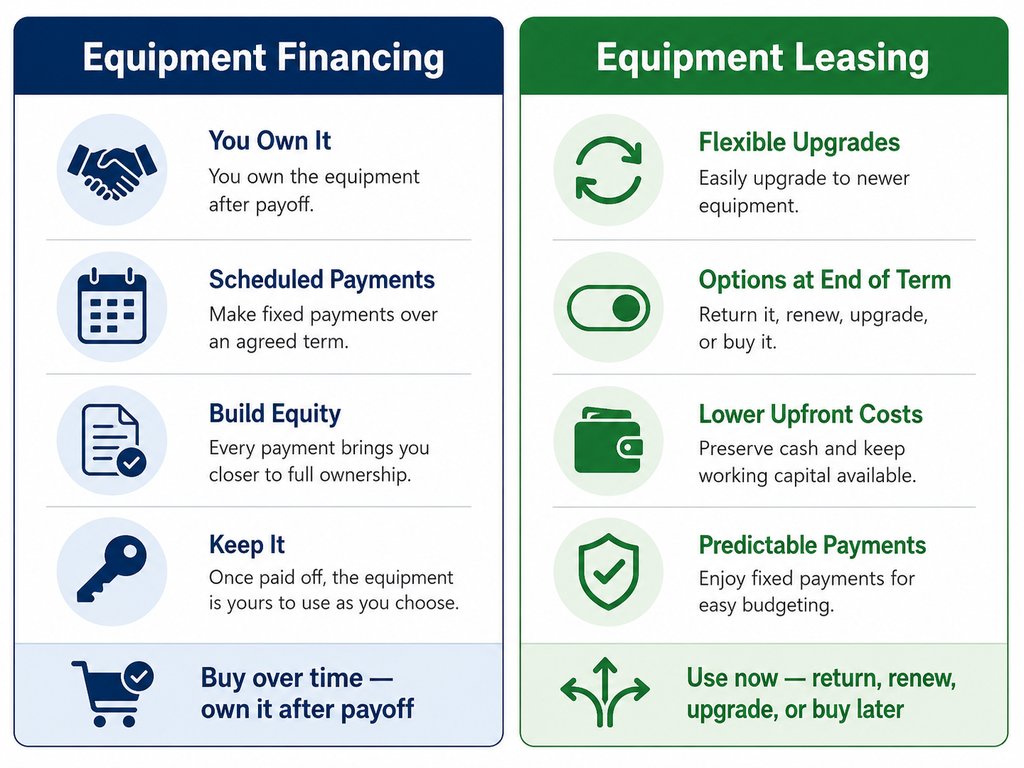
- Equipment financing is often used when the business wants to buy and own the equipment over time.
- Equipment leasing is often used when the business wants to use the equipment for a period of time, with end-of-term options depending on the lease structure.
Here is a simplified comparison:
| Category | Equipment Financing | Equipment Leasing |
|---|---|---|
| Main purpose | Buy equipment over time | Use equipment during a lease term |
| Ownership goal | Often leads to ownership | Depends on lease type and end-of-term option |
| Best for | Long-term equipment use | Flexibility, upgrades, or defined use periods |
| Payment structure | Scheduled payments over a term | Scheduled lease payments over a term |
| End of term | Equipment is typically owned after payoff, depending on structure | Return, renew, upgrade, or buyout may be available depending on structure |
| Common use case | Essential equipment with long useful life | Equipment that may need flexibility or upgrades |
Ownership: Do You Want to Keep the Equipment?
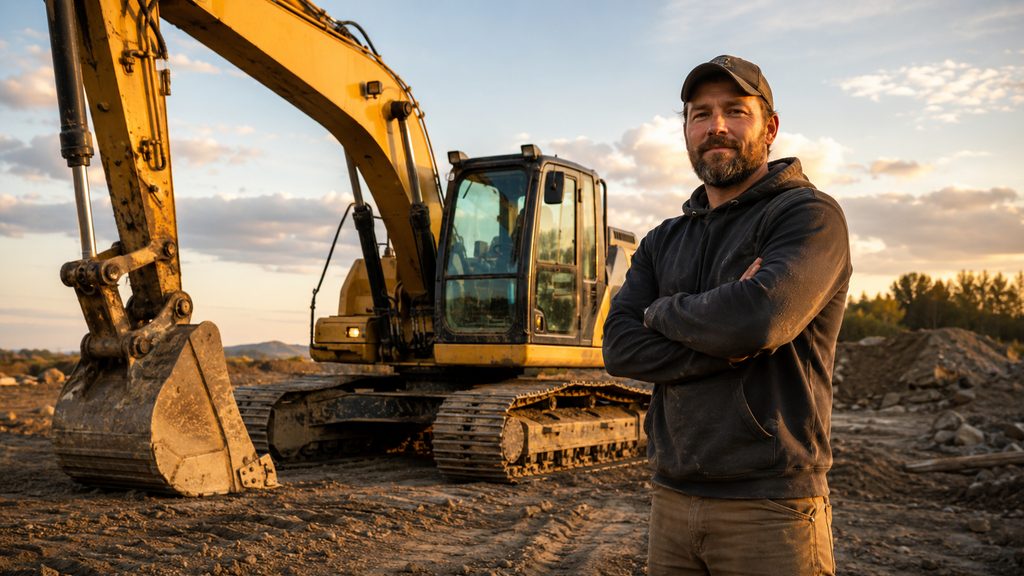
One of the biggest questions is whether you want to own the equipment long term.
If your business expects to use the equipment for many years, equipment financing may be a strong fit. Examples include a contractor buying an excavator, a machine shop buying a CNC machine, a landscaping company buying a trailer and mower package, or a medical practice purchasing diagnostic equipment.
In these cases, the equipment may remain useful long after the payment term ends. Ownership can make sense because the business expects long-term value from the asset.
Leasing may be a better fit when ownership is less important or when flexibility matters more. For example, if equipment changes quickly, becomes outdated, or may need to be upgraded as the business grows, a lease structure with end-of-term flexibility may be worth reviewing.
Cash Flow: Which Option Preserves More Working Capital?
Both financing and leasing can help preserve working capital compared with paying cash upfront.
Instead of draining cash reserves to buy equipment outright, the business can spread the cost over time and keep capital available for payroll, inventory, materials, fuel, rent, repairs, marketing, and unexpected expenses.
The most important question is not only which option has the lowest payment. The better question is which option fits the way your business earns revenue and manages cash flow.
A lower payment may help, but the structure still needs to match the business purpose. If the equipment helps generate revenue, improve efficiency, reduce downtime, or allow the business to take on more work, a monthly payment may be easier to justify.
Useful Life: How Long Will the Equipment Help Your Business?
The useful life of the equipment should influence the financing decision.
If the equipment will be useful for many years, financing may make sense because the business can spread the cost over time while building toward ownership. This is common for heavy equipment, manufacturing machinery, work trucks, trailers, and other durable assets.
If the equipment may become outdated quickly, consider leasing. Some businesses prefer leasing when technology changes often or when they may want to upgrade at the end of the term.
A good rule of thumb is to avoid locking yourself into a structure that lasts longer than the equipment remains useful to your business.
End-of-Term Options: Read the Details
End-of-term details are one of the most important differences between financing and leasing.
With equipment financing, the goal is usually to pay off the equipment and own it, depending on the agreement.
With equipment leasing, the end of the term can vary. A lease may include a purchase option, fair market value option, renewal option, return option, or other structure. Review the exact terms before signing.
Before agreeing to any equipment lease, business owners should understand what happens at the end of the term, how the buyout works, whether notice is required, and whether there are return conditions or additional costs.
Tax and Accounting Treatment
Business owners often ask whether equipment financing or leasing is better for taxes.
The answer depends on the structure of the agreement, the business, the equipment, and current tax rules. Some equipment purchases or leases may be treated differently for accounting and tax purposes. Because this can vary, business owners should review the agreement with a CPA or tax advisor before relying on any tax benefit.
The financing decision should not rest only on a possible deduction. It should also consider cash flow, equipment use, ownership goals, payment affordability, and the overall growth plan of the business.
When Equipment Financing May Be the Better Fit
- The equipment is essential to your business operations
- You expect to use the equipment for many years
- You want to own the equipment after the term
- The equipment has strong long-term value
- The asset is durable and unlikely to become outdated quickly
- The business wants to build equity in the equipment
- You are replacing equipment that caused downtime or repair issues
Equipment financing is often a good fit for revenue-producing equipment that the business plans to keep and use long term.
When Equipment Leasing May Be the Better Fit
- You want flexibility at the end of the term
- The equipment may need regular upgrades
- You are not sure whether you want long-term ownership
- You need equipment for a specific period, contract, or project
- You want to preserve cash and compare future options
- The equipment is tied to technology that may change quickly
- You want to review return, renewal, upgrade, or buyout options
Equipment leasing can be useful when flexibility is more important than immediate ownership.
Which Option Is Better for Startups?
Startups and newer businesses may be able to use either equipment financing or equipment leasing, but approval requirements can be stricter than they are for established businesses.
Lenders may look more closely at the owner’s credit profile, industry experience, equipment type, down payment, collateral, business plan, or projected use of the equipment.
For startups, the best structure usually depends on the asset and the strength of the overall application. A newer business buying essential revenue-producing equipment may have options, but the terms may vary based on risk and lender requirements.
Questions to Ask Before Choosing Financing or Leasing
- Do I want to own the equipment long term?
- How long will the equipment remain useful to my business?
- Will the equipment help generate revenue or reduce costs?
- Can my business afford the payment during slower months?
- Will this purchase preserve or weaken my cash reserves?
- What happens at the end of the term?
- Are there buyout, renewal, return, or upgrade options?
- Are there fees, notice requirements, or return conditions?
- Should I review the tax treatment with my CPA?
- Does the structure match my business growth plan?
Example: Contractor Comparing Financing and Leasing
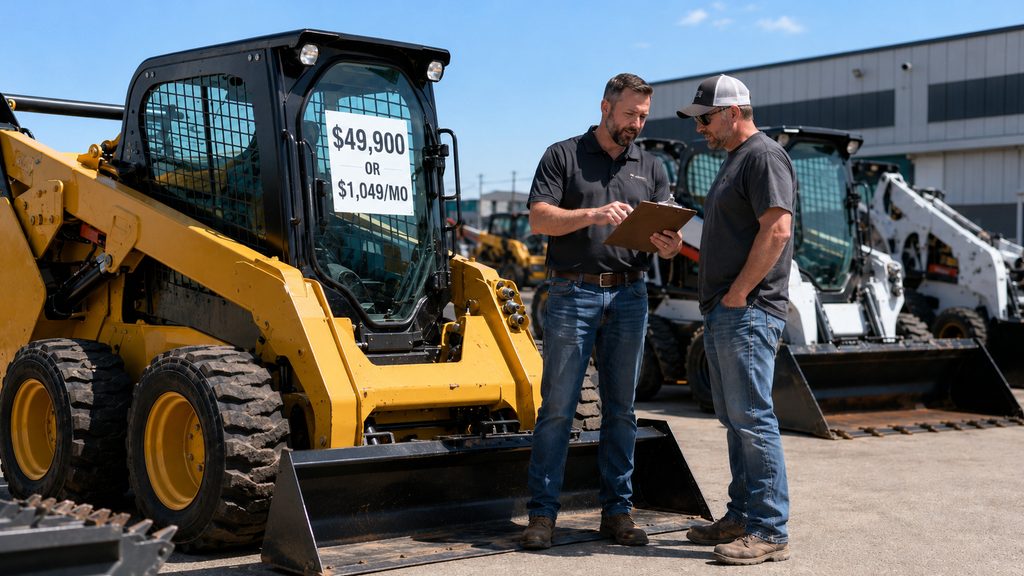
A contractor needs a skid steer for upcoming jobs. The contractor will use the machine weekly to finish jobs faster and reduce rental costs.
If the contractor expects to use the skid steer for several years, construction equipment financing may be a strong fit because the business wants long-term ownership of a durable asset.
But if the contractor only needs the machine for a temporary project, is unsure about future equipment needs, or wants the ability to upgrade later, leasing may be worth comparing.
The right answer depends on how the machine will be used, how long it will be needed, how the payment fits cash flow, and what the business wants at the end of the term.
Final Takeaway
Equipment financing and equipment leasing can both help business owners acquire equipment without paying the full cost upfront.
Equipment financing often fits a business that wants to buy equipment over time and keep it long term. Leasing often fits a business that wants access to equipment with more flexibility at the end of the term.
When comparing equipment financing vs equipment leasing, neither option is automatically better. The right choice depends on ownership goals, cash flow, useful life, equipment type, lender requirements, and the business growth plan.
Before paying cash, financing, or leasing equipment, compare the options carefully. The best structure is the one that helps your business get the equipment it needs while preserving cash and keeping operations financially healthy.
Frequently Asked Questions
Equipment financing is commonly used when a business wants to buy equipment and pay for it over time. Equipment leasing is commonly used when a business wants to use equipment for a defined term, with end-of-term options that may include return, renewal, upgrade, or purchase depending on the lease structure.
Neither option is automatically better. Equipment financing may be better when the business wants long-term ownership. Equipment leasing may be better when the business wants flexibility, upgrade options, or equipment for a specific period. The best choice depends on the equipment, cash flow, ownership goals, and approval terms.
In many financing structures, the business is working toward ownership and may own the equipment after the agreement is paid off, depending on the terms. Business owners should review the agreement before signing.
Some leases include purchase or buyout options, but not all leases are structured the same way. The business should review the end-of-term options, buyout terms, notice requirements, and return conditions before entering a lease.
Leasing may be worth considering when equipment may need to be upgraded regularly or could become outdated. However, the right structure depends on the business use, lease terms, and available options.
Some startups may qualify for equipment financing or leasing, but newer businesses may face stricter approval requirements. Credit profile, industry experience, equipment type, down payment, and business plan may all matter.
Tax treatment should not be the only factor. Business owners should review potential tax and accounting treatment with a CPA or tax advisor and also consider cash flow, equipment use, ownership goals, and payment affordability.
Ready to Compare Equipment Financing and Leasing Options?
BNC Finance helps business owners explore equipment financing and leasing options for new and used business equipment.
Whether you are buying from a dealer, vendor, private seller, or auction, getting prequalified can help you compare options before using your cash.
All financing and leasing options are subject to credit approval. Terms, structures, equipment eligibility, end-of-term options, and availability vary by business profile, equipment type, seller, lender requirements, and approval. This article is for general educational purposes only and is not tax, legal, accounting, or financial advice. Business owners should consult a qualified CPA, attorney, or financial advisor when evaluating tax, accounting, or legal questions.