
Business equipment can be expensive — and many owners wonder what types of equipment businesses can finance.
Whether you run a construction company, restaurant, medical office, landscaping business, manufacturing shop, transportation company, or service business, the equipment you need to operate can require a large upfront investment.
The good news is that many types of business equipment can be financed.
Equipment financing allows business owners to acquire the tools, machines, vehicles, and technology they need without paying the full cost upfront. Instead of draining cash reserves, the business can spread the cost over time while using the equipment to operate, grow, or generate revenue.
But what types of equipment can businesses actually finance? The answer is broader than many business owners realize.
What Is Business Equipment Financing?
Business equipment financing is a funding option used to purchase equipment for business use.
The equipment may be new or used. It may come from a dealer, vendor, manufacturer, auction, or private seller, depending on the lender and transaction. In many cases, the equipment being financed helps support the financing structure because it has value as a business asset.
Businesses use equipment financing to acquire items such as machinery, vehicles, tools, trailers, medical devices, restaurant equipment, technology, and heavy equipment.
The main purpose is simple: get the equipment your business needs while preserving working capital.
Common Types of Equipment Businesses Can Finance
Many business owners think equipment financing only applies to heavy machinery or large trucks. Those are common examples, but they are only part of the picture.
Businesses can often finance a wide range of equipment, including:
- Construction equipment
- Trucks and trailers
- Restaurant equipment
- Medical and dental equipment
- Manufacturing machinery
- Landscaping equipment
- Auto repair equipment
- Agricultural equipment
- Drones and commercial UAV systems
- Material handling equipment
- Waste management equipment
- Commercial cleaning equipment
- Fitness and wellness equipment
- Technology and business systems
- Event rental and party rental equipment
The exact approval depends on the business profile, equipment type, seller, price, credit profile, time in business, and lender requirements.
Construction Equipment
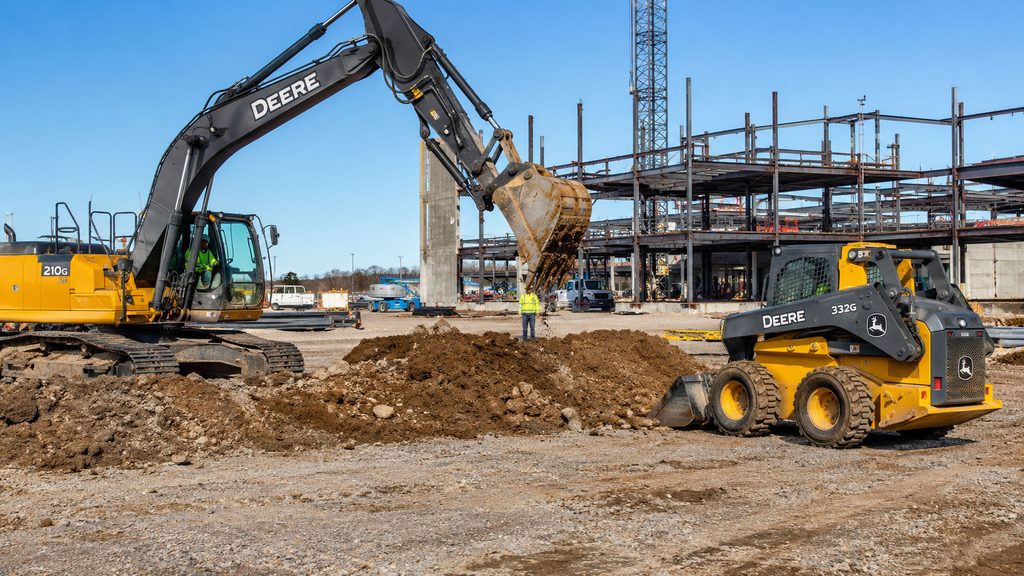
Construction equipment is one of the most common categories for business equipment financing. This can include:
- Excavators
- Skid steers
- Bulldozers
- Backhoes
- Wheel loaders
- Compact track loaders
- Mini excavators
- Dump trucks
- Cranes
- Concrete equipment
- Pavers
- Graders
- Rollers
- Compactors
- Attachments
Construction businesses often use construction equipment financing because equipment is expensive but essential. A contractor may need a machine to complete jobs faster, take on larger projects, reduce rental costs, or replace older equipment that causes downtime.
Used construction equipment may also be financeable, depending on the equipment, age, condition, seller, and lender program.
Trucks, Trailers, and Transportation Equipment
Many businesses rely on vehicles and trailers to move equipment, materials, employees, or products. Financeable transportation equipment may include:
- Box trucks
- Work trucks
- Dump trucks
- Semi-trucks
- Trailers
- Enclosed trailers
- Flatbed trailers
- Utility trailers
- Service trucks
- Shuttle vans
- Delivery vehicles
- Tow trucks
- Refrigerated vehicles
For many companies, a truck or trailer is not just transportation. It is part of the revenue system.
A contractor needs a truck and trailer to move equipment. A delivery business needs vehicles to expand routes. A mobile service business needs transportation to serve customers. Financing can help the business acquire the vehicle while keeping cash available for fuel, insurance, payroll, maintenance, and operating expenses.
Restaurant and Food Service Equipment
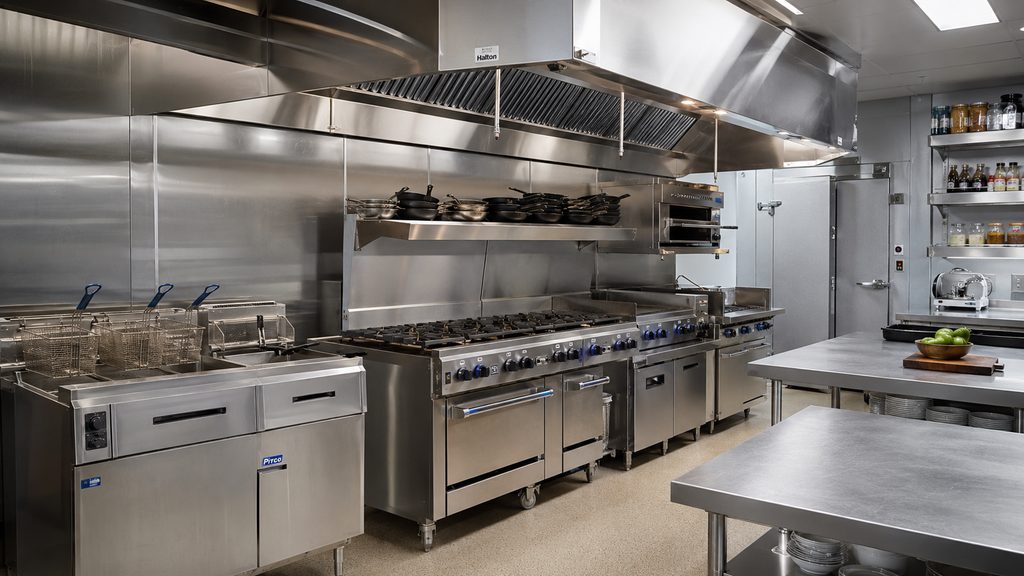
Restaurant equipment can be expensive, especially when a business is opening, expanding, or replacing essential kitchen systems. Common restaurant equipment that may be financed includes:
- Ovens
- Ranges
- Fryers
- Grills
- Walk-in coolers
- Walk-in freezers
- Refrigeration units
- Prep tables
- Commercial dishwashers
- Food trucks
- Bakery equipment
- Coffee equipment
- Ice machines
- POS systems
- Ventilation and hood systems
Restaurants and food service businesses often have many competing cash needs, including payroll, rent, food inventory, utilities, insurance, and marketing. Financing can help preserve cash while still allowing the business to buy or replace critical equipment.
Medical and Dental Equipment
Medical, dental, and healthcare businesses often need specialized equipment to provide services, improve efficiency, or expand treatment options. Financeable medical and dental equipment may include:
- Dental chairs
- Imaging equipment
- X-ray systems
- Diagnostic equipment
- Exam tables
- Sterilization equipment
- Lab equipment
- Patient monitoring systems
- Physical therapy equipment
- Aesthetic and med spa equipment
- Durable medical equipment
- Practice technology
For healthcare businesses, equipment can directly affect patient care, service capacity, and revenue. Financing may help a practice add services or modernize equipment without tying up too much cash at once.
Manufacturing and Industrial Equipment
Manufacturing companies often require equipment that is expensive, specialized, and central to production. Examples may include:
- CNC machines
- Press brakes
- Lathes
- Mills
- Laser cutters
- Packaging equipment
- Conveyor systems
- Welding equipment
- Industrial compressors
- Printing equipment
- Fabrication equipment
- Material handling systems
- Production machinery
Manufacturing equipment financing can help businesses increase output, improve efficiency, reduce bottlenecks, or replace older machines.
Because manufacturing equipment can often be used for many years, financing may allow the business to match the cost of the asset to the useful life of the equipment.
Landscaping and Tree Service Equipment
Landscaping and tree service companies often need multiple pieces of equipment to operate efficiently. Common financeable equipment may include:
- Commercial mowers
- Skid steers
- Mini excavators
- Trailers
- Dump trailers
- Chippers
- Stump grinders
- Tractors
- Compact loaders
- Utility vehicles
- Irrigation equipment
- Snow removal equipment
- Sprayers
For landscaping businesses, equipment can determine how many jobs a crew can complete and what types of projects the business can accept. Financing may help a company grow without using all available cash during busy or seasonal periods.
Auto Repair and Transportation Service Equipment
Auto repair shops, body shops, tire shops, and transportation service businesses may be able to finance essential shop equipment. Examples include:
- Vehicle lifts
- Alignment machines
- Tire changers
- Balancers
- Diagnostic equipment
- Paint booths
- Compressors
- Tool systems
- Frame machines
- Shop equipment
- Tow trucks
- Service vehicles
For an auto repair shop, equipment can directly affect service capacity. If a shop lacks the right lift, diagnostic system, or repair equipment, it may have to turn away work. Financing can help the business add capacity while preserving cash for payroll, parts, rent, and operating expenses.
Agricultural Equipment
Farmers, ranchers, and agricultural businesses often use financing to acquire equipment that supports production, efficiency, and seasonal operations. Financeable agricultural equipment may include:
- Tractors
- Sprayers
- Harvesters
- Implements
- Irrigation systems
- Utility vehicles
- Trailers
- Skid steers
- Feed equipment
- Agricultural drones
- Precision agriculture equipment
Because agricultural businesses may have seasonal revenue cycles, payment structure can be especially important. Some financing programs may allow seasonal, annual, or custom payment options depending on the lender and approval.
Commercial Drones and UAV Equipment
Commercial drones are increasingly used across industries such as agriculture, construction, surveying, mapping, inspection, public safety, energy, and mining. Financeable drone financing equipment may include:
- Commercial drones
- Spray drones
- Mapping drones
- Inspection drones
- LiDAR sensors
- Thermal cameras
- Multispectral cameras
- RTK systems
- Ground control systems
- Batteries and charging systems
- Drone software
- Training and support packages
Drone equipment can be a strong financing candidate when it is used for commercial work and helps the business generate revenue, improve efficiency, or expand services.
Material Handling and Warehouse Equipment
Businesses that store, move, or ship products often need material handling equipment. Examples include:
- Forklifts
- Pallet jacks
- Reach trucks
- Scissor lifts
- Conveyor systems
- Warehouse racking
- Loading dock equipment
- Order-picking equipment
- Packaging equipment
Warehouses, distributors, manufacturers, contractors, and logistics companies may use financing to improve movement, safety, storage, and productivity.
Commercial Cleaning and Facility Service Equipment
Commercial cleaning and facility service companies may also finance equipment needed to serve customers or expand contracts. Examples include:
- Floor scrubbers
- Sweepers
- Pressure washers
- Carpet cleaning machines
- Window cleaning systems
- Power washing equipment
- Restoration equipment
- Janitorial equipment
- Service vehicles
- Trailers
For service businesses, equipment often determines what jobs they can accept and how efficiently crews can work. Financing can help a company take on more work without paying the full equipment cost upfront.
Event Rental and Party Rental Equipment
Event rental and party rental businesses may need large amounts of equipment to serve customers during busy seasons. Financeable items may include:
- Tents
- Tables and chairs
- Linens
- Staging
- Lighting
- Audio equipment
- Bounce houses
- Photo booths
- Trailers
- Event flooring
- Portable bars
- Catering equipment
For rental businesses, equipment is often the inventory that produces revenue. Financing may help the business expand its rental catalog while preserving cash for staffing, storage, delivery vehicles, repairs, and marketing.
Technology, Software, and Business Systems
Some business technology may also be financeable, especially when it is part of a larger business system or equipment package. This may include:
- POS systems
- Security systems
- Computer hardware
- Servers
- Business software
- Communication systems
- Medical software
- Drone software
- Manufacturing software
- Installation and training packages
Not all software or technology purchases qualify the same way. Approval can depend on whether the technology is bundled with equipment, whether it is essential to business operations, and what lender programs are available.
Can Businesses Finance Used Equipment?
Yes, used equipment can often be financed.
Many businesses choose used equipment because it may cost less than new equipment while still providing strong value. Used equipment financing is common in industries such as construction, transportation, agriculture, manufacturing, auto repair, and landscaping.
The lender may review factors such as:
- Equipment age
- Condition
- Mileage or hours
- Seller type
- Purchase price
- Equipment value
- Business profile
- Credit profile
- Time in business
Used equipment can be a good option when the asset is reliable, priced appropriately, and supports business operations.
Can Businesses Finance Equipment From a Private Seller or Auction?
In some cases, yes. Businesses may be able to finance equipment purchased from a private seller or auction, depending on the lender and transaction details.
Private party and auction financing can be useful for business owners who find equipment outside of a traditional dealer. However, these transactions may require additional review because the lender may need to verify equipment details, seller information, invoices, titles, serial numbers, condition, or payoff information.
If you are planning to buy equipment from a private seller or auction, it is smart to get prequalified before bidding or committing to the purchase.
Can Soft Costs Be Included?
Sometimes, equipment financing may include soft costs related to the purchase. Soft costs may include:
- Delivery
- Shipping
- Installation
- Training
- Software
- Setup
- Attachments
- Accessories
- Warranties
- Support packages
Whether soft costs can be included depends on the lender, equipment type, transaction structure, and approval.
For example, a commercial drone package may include sensors, software, training, and batteries. A restaurant equipment package may include installation and setup. A manufacturing equipment purchase may include freight and installation.
Bundling these costs into one financing structure may help the business avoid paying multiple expenses upfront.
What Equipment Usually Does Not Fit?
Not every business expense is considered equipment. Items that may not fit standard equipment financing include:
- Regular inventory for resale
- Payroll
- Rent
- Taxes
- Marketing expenses
- General operating expenses
- Short-term supplies
- Personal-use items
- Equipment unrelated to the business
These expenses may require a different type of financing, such as working capital, a business line of credit, or another funding product. The best option depends on what the funds are being used for.
How to Know If Your Equipment Can Be Financed
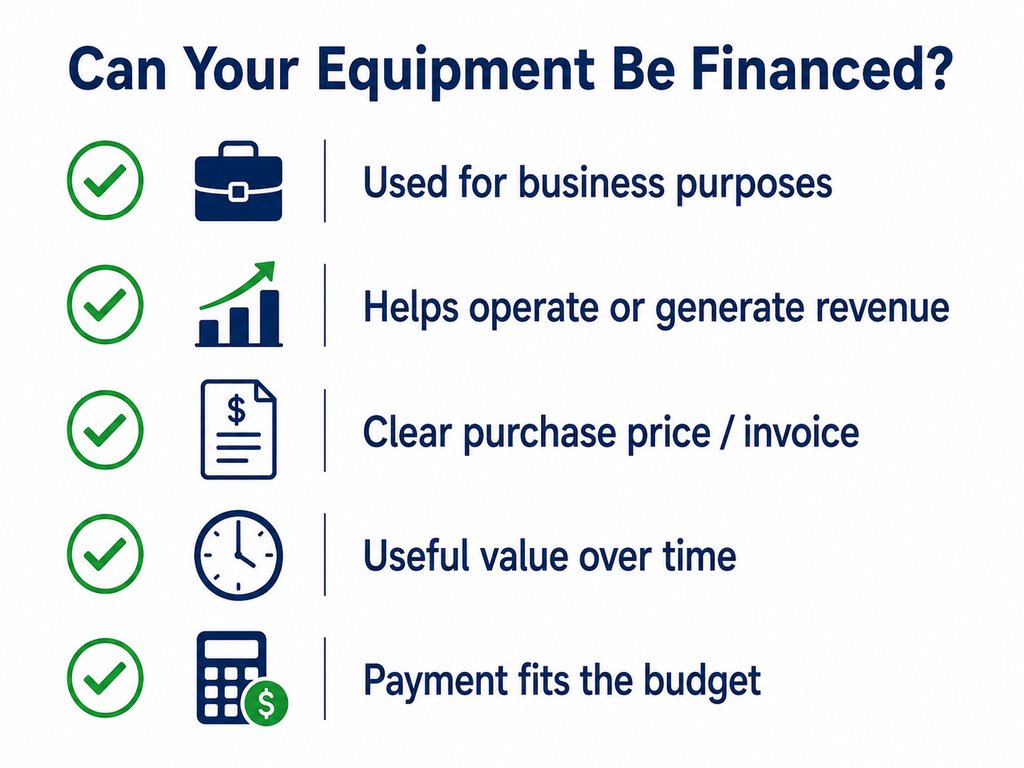
A simple way to evaluate equipment is to ask:
- Is it used for business purposes?
- Does it help the business operate or generate revenue?
- Does it have a clear purchase price?
- Is there an invoice, quote, or seller agreement?
- Does the equipment have useful value over time?
- Is the seller able to provide the needed information?
- Can the business afford the payment?
If the answer is yes, the equipment may be financeable. The next step is usually to submit basic business information, equipment details, and a quote or invoice for review.
Why Equipment Financing Can Be Useful
Equipment financing can help businesses:
- Preserve cash reserves
- Avoid large upfront purchases
- Replace outdated equipment
- Reduce downtime
- Expand service capacity
- Take on larger jobs
- Add revenue-producing assets
- Upgrade technology
- Finance new or used equipment
- Bundle equipment and related costs
For many business owners, equipment is not optional. It is what allows the business to operate. Financing can help the business get the equipment it needs while keeping cash available for payroll, materials, fuel, inventory, and growth.
Final Takeaway
Businesses can finance many types of equipment, from construction machinery and trucks to restaurant equipment, medical devices, manufacturing systems, landscaping tools, drones, forklifts, and more.
The key is that the equipment should be used for business purposes and support the operation, growth, or revenue of the company.
If you are considering an equipment purchase, it is worth reviewing financing options before paying cash. Financing may help you preserve working capital, acquire the equipment sooner, and keep your business in a stronger cash position.
Frequently Asked Questions About Business Equipment Financing
Businesses may be able to finance construction equipment, trucks, trailers, restaurant equipment, medical equipment, manufacturing machinery, landscaping equipment, drones, forklifts, technology, and other equipment used for business purposes.
Yes, used equipment can often be financed depending on the equipment type, age, condition, seller, purchase price, business profile, and lender approval.
Some startups may qualify for equipment financing, but approval requirements are usually stronger for newer businesses. Credit profile, industry, equipment type, down payment, and business plan may all matter.
In some cases, equipment from a private seller can be financed. The lender may need to review the seller, invoice, title, serial number, equipment condition, and payoff details.
Sometimes. Soft costs such as installation, shipping, software, training, attachments, or accessories may be included depending on the lender, equipment type, and approval.
Need Equipment for Your Business?
BNC Finance helps business owners explore financing options for new and used equipment across many industries.
Whether you are buying from a dealer, vendor, auction, or private seller, getting prequalified can help you compare options before using your cash.
All financing is subject to credit approval. Terms, structures, and availability vary by business profile, equipment type, seller, lender requirements, and approval. This article is for general educational purposes only and is not tax, legal, or financial advice.